
Building a PMO in the Netherlands Life Sciences Sector: When and Why It Matters
Building a PMO in the Netherlands Life Sciences Sector: When and Why It Matters
Building a PMO in the Netherlands Life Sciences sector is increasingly essential for organizations managing complex innovation pipelines. At SIRE® Life Sciences, we’ve seen firsthand how companies juggling multiple R&D programs struggle with resource allocation, strategic alignment and project visibility challenges a well-structured Project Management Office (PMO) can effectively solve. This article explains when and why a PMO becomes critical, with practical insights for HR directors, CEOs and leadership teams across the Dutch life sciences ecosystem.
The Dutch life sciences ecosystem is thriving
The Netherlands has become one of the most interesting places in Europe for life sciences innovation.
If you walk through places like Leiden Bio Science Park or visit the labs at Utrecht Science Park, you quickly notice how connected the ecosystem is.
Startups collaborate with universities.
Universities collaborate with industry.
Global pharmaceutical companies sit just a few minutes away from early-stage biotech ventures.
This proximity accelerates innovation.
But it also creates complex project environments.

Projects don’t stay simple for long
Many companies start with a single development focus. One major program. One central scientific goal.
But success tends to bring expansion.
A second research initiative appears.
Another collaboration starts with an academic group.
A technology platform project begins running alongside the core pipeline.
Before long there are several initiatives moving forward at the same time.
Each of them makes sense individually.
But together they create something that leadership teams sometimes struggle with a portfolio of projects competing for attention and resources.
The moment things start getting messy
In most companies there is a particular phase where project coordination starts becoming difficult.
It’s not dramatic at first.
Maybe two teams suddenly need the same specialist.
Maybe development timelines begin overlapping.
Maybe leadership meetings turn into long status updates instead of strategic discussions.
I’ve seen this pattern many times.
At first, it just feels like growing pains.
But eventually someone asks a simple question:
Do we actually have a clear overview of everything we’re running?
When the answer is “not really”, the idea of introducing more structured project coordination often comes up.
What a PMO actually changes
The term PMO sometimes makes people uneasy. It can sound like something that introduces layers of administration.
But the best PMOs I’ve seen do something surprisingly straightforward.
They provide visibility.
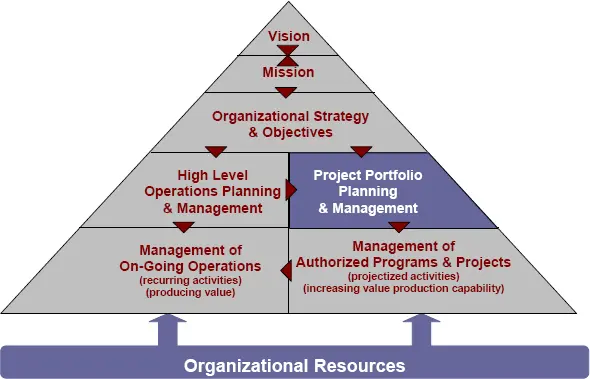
Instead of information living in different teams, documents and spreadsheets, a PMO creates a central overview of the organization’s projects.
Leadership can see:
- which initiatives are active
- how resources are allocated
- where timelines intersect
- which projects align with long-term strategy
Once that visibility exists, many decisions become easier.
The tipping points most companies recognize
From what I’ve observed, organizations don’t usually build a PMO because a framework tells them to.
They build one because the complexity of their work demands it.
Several signals often appear around the same time:
- multiple teams requesting the same expertise
- limited visibility across development programs
- leadership spending significant time resolving project conflicts
- unclear prioritization between initiatives
When those signals appear together, the organization has usually reached a point where informal coordination is no longer enough.
When a PMO actually helps innovation
A well-structured PMO isn’t there to slow things down.
In fact, the opposite tends to happen.
When project environments become clearer, three things often improve quickly.
First, leadership understands where the organization’s energy is really going.
Second, teams find it easier to collaborate because responsibilities and timelines are visible.
And thirdly, people don’t always expect decisions to become faster.
When everyone sees the same information, discussions move from figuring out what is happening to deciding what to do next.
Not every PMO works the same way
It’s also worth mentioning that some PMOs struggle.
Usually, the issue isn’t the concept itself. It’s the way the structure is introduced.
If the focus becomes too administrative, teams may see the PMO as something that slows them down.
The most effective PMOs tend to stay lightweight. Their role is to support coordination, not control every detail of project execution.
Looking ahead
The life sciences sector in the Netherlands will likely continue growing over the coming years.
More innovation.
More partnerships.
More overlapping development programs.
As that happens, organizations will naturally look for ways to coordinate complex work more effectively.
For many of them, establishing a PMO becomes part of that journey.
Not as a bureaucratic layer.
But as a way to keep innovation moving forward without losing clarity.
A final thought
The Netherlands has built an impressive life sciences ecosystem.
But ecosystems that thrive also become complex.
At some point organizations reach a stage where coordination becomes just as important as discovery.
And that’s usually when the conversation around a PMO begins.
Let’s keep the conversation going
At SIRE® Life Sciences, we speak with organizations across the Dutch life sciences industry every week.
HR leaders, talent acquisition teams, procurement specialists, hiring managers and CEOs often share similar questions around growth and operational structure.
If your organization is scaling research programs or managing increasingly complex innovation pipelines, we’re always happy to exchange perspectives.
Sometimes the most useful insights come from a simple conversation.