
The New Leadership Profile in Life Sciences: Skills That Matter in 2026

Leadership in Dutch Life Sciences Is Being Tested, Not Redefined
We hear a lot of talk about future leadership. Most of it sounds impressive. Very little of it feels real.
Over the past year, we have sat in meeting rooms across the Netherlands biotech scale-ups, pharma subsidiaries, MedTech innovators and the pattern is strikingly similar. The science is strong. The ambition is there. The leadership pressure however is very different from even three years ago.
One CEO said something that stuck with us: We don’t lack experience. We hesitate too long.
That’s the real issue heading into 2026. Not talent shortages. Not job titles. Decision-making under pressure.
Why Traditional Leadership Profiles Are Starting to Fail
The Dutch Context Changes Everything
Leadership in the Netherlands life sciences sector has always been shaped by:
- Lean teams
- High scientific standards
- Strong consensus culture
That worked well for a long time. It doesn’t always work anymore.
What we see now is leadership teams expected to:
- Scale internationally faster
- Align science, digital and commercial priorities
- Deliver results while markets stay unpredictable
Yet many leadership profiles are still built around past success, not future strain.
Where Things Usually Break First
In my work with SIRE Life Sciences, leadership problems rarely start loudly. They start quietly.
Usually with:
- Decisions that keep getting postponed
- Teams waiting instead of moving
- Leaders asking for one more analysis
The issue isn’t intelligence. It’s confidence under uncertainty.
The Reality of Leading in Life Sciences in 2026
Here’s the part many people underestimate.
The environment Dutch life sciences leaders are stepping into is not just complex, it’s continuously unclear.
- Funding is available, but patience is thinner
- Digital tools are everywhere, but clarity isn’t
- Partnerships multiply, accountability blurs
- Global expectations land on relatively small leadership teams
This doesn’t reward perfection. It rewards judgment.
The Leadership Skills That Actually Matter in 2026
I’m going to be specific here, because vague leadership language doesn’t help anyone.
These are the five capabilities I consistently see separating leaders who cope from those who struggle.
1. Decision Velocity (Without Waiting for Certainty)
I’ve seen leadership teams lose six months debating a decision that should have taken six weeks.
By 2026, that delay is expensive.
Strong leaders:
- Decide with incomplete information
- Adjust fast when reality changes
- Keep momentum alive
Waiting for certainty in life sciences is usually a way of avoiding responsibility.
2. Cross-Domain Fluency
Leaders no longer get away with that’s not my area.
You don’t need to be the smartest scientist or the best commercial strategist. You do need to understand enough to connect the dots.
Especially in Dutch organizations, where leadership teams are small, delegation without understanding creates blind spots fast.
3. Contextual Intelligence
Not every moment requires the same leadership style.
Some situations need structure. Others need speed. Some need patience. Others need a clear call even if it’s uncomfortable.
The best leaders we work with don’t follow a playbook. They read the moment.
4. Ecosystem Leadership
Leadership no longer stops at the organizational boundary.
By 2026, Dutch life sciences leaders are expected to influence:
- Strategic partners
- External innovation ecosystems
- International stakeholders
Often without formal authority. This is difficult and unavoidable.
5. Strategic Endurance
This one is rarely talked about.
Most leaders can handle pressure for a year. Far fewer stay clear-headed after three uncertain ones.
Strategic endurance is about:
- Maintaining direction
- Keeping teams aligned
- Not burning out the organization
In my view, this will quietly become one of the most valuable leadership traits in the Netherlands life sciences sector.
What Boards and Investors Are Really Looking At
Boards don’t always articulate it well, but they feel it immediately when leadership isn’t working.
They pay attention to:
- How decisions stack up over time
- Whether leadership teams move together or fragment
- How leaders adapt as the organization scales
Titles matter less than people think. Judgment matters more than anyone admits.
Turning These Skills into Hiring and Succession Decisions
This is where many organizations struggle.
What Needs to Change
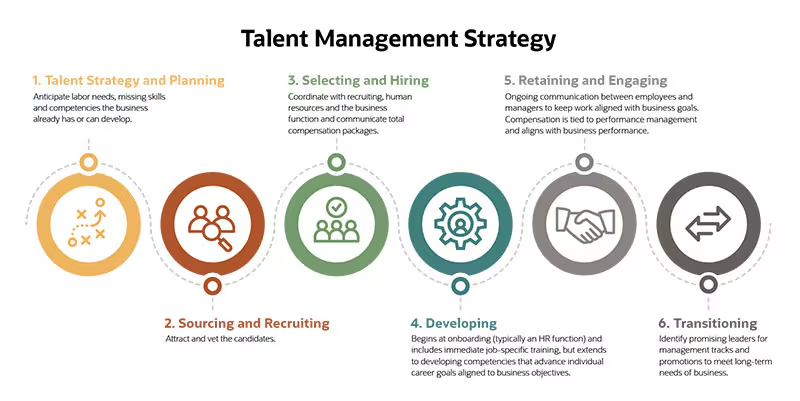
- Redefine leadership success
Stop copying profiles from the past. Start designing for future pressure. - Assess how leaders decide
Not just what they’ve done but how they think under stress. - Build optionality into succession
The best Dutch organizations don’t bet on one future. They prepare for several.
Why Most Leadership Content Misses the Point
A lot of leadership content feels safe. Real leadership isn’t.
The gap isn’t information. It’s honesty about what leadership actually costs emotionally, cognitively and organizationally.

A Final Question for Dutch Life Sciences Leaders
As 2026 approaches, the question I keep asking leadership teams is simple:
Do your leaders create momentum when things are unclear, or do they wait for clarity that never comes? The answer usually tells me everything.
FAQ’s
What defines a successful life sciences leader in 2026?
Clear judgment, fast decisions and the ability to lead through uncertainty.
Why don’t traditional leadership profiles work anymore?
They focus too much on past experience and not enough on how leaders decide under pressure.
Which skills matter most in the Netherlands life sciences market?
Decision speed, cross-functional understanding and ecosystem leadership.
How should leadership readiness be assessed?
By looking at how leaders think and act when information is incomplete.
How can organizations future-proof leadership decisions?
By redefining leadership profiles and aligning them with future business realities, not past roles.
Call to Action
If you’re a:
- HR Director
- Talent Acquisition Leader
- Hiring Manager
- Purchasing or Procurement Leader
- CEO or Board Member
and you’re rethinking leadership for the next phase of growth, let’s have a real conversation.
At SIRE Life Sciences, we help Dutch life sciences organizations rethink leadership profiles, succession and decision-making capacity, not just roles.
Reach out when you’re ready. The earlier the conversation, the better the outcome.