
Digital Transformation Fails Without People Strategy
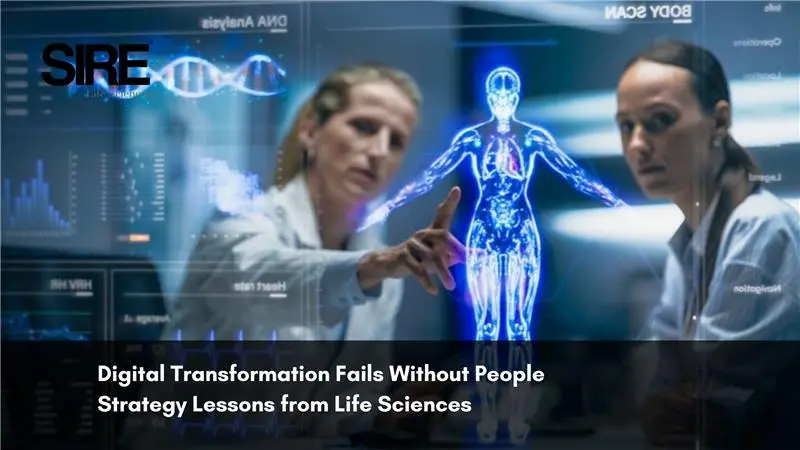
Lessons from the Netherlands Life Sciences Industry
Digital transformation is no longer optional in the Dutch life sciences sector. Whether you’re operating in biotech, pharma, medtech or advanced diagnostics the pressure is the same: move faster, use data better and scale innovation without compromising quality.
Yet despite record investments in platforms, AI tools and digital infrastructure, many transformation programmes quietly stall.
Not because the technology doesn’t work. But because the organization never changes.
At SIRE® Life Sciences, we see this pattern repeatedly across the Netherlands life sciences ecosystem: digital ambition outpaces people’s readiness and when that happens, transformation fails.

Why Digital Transformation So Often Falls Short
Let’s start with an uncomfortable truth.
Most digital transformation initiatives don’t fail at launch. They fail six to eighteen months later, when:
- Adoption plateaus
- Digital teams become isolated
- Business leaders lose confidence
- Value creation never materialises
The tools are live. The dashboards are built. The pilots are successful.
But behaviour stays the same.
The Core Problem Isn’t Technology
Across the Dutch life sciences industry, we notice a recurring assumption:
If we introduce the right systems, people will adapt. In reality, the opposite is true.
People don’t change how they work because new technology exists. They change when roles, incentives, leadership behaviour and decision-making change.
That’s where most transformations break down.
What Competitors talk about and what they miss
Large consultancy reports talk about:
- Strategy alignment
- Digital roadmaps
- Emerging technologies
- Culture (in very broad terms)
Academic research explains that digital transformations fail, but rarely how failure unfolds inside organisations.
What’s missing is a grounded explanation of what actually happens inside life sciences companies when people strategy is overlooked.
Why Life Sciences in the Netherlands Is Especially Exposed
The Netherlands has one of the most advanced life sciences ecosystems in Europe. Deep scientific expertise, strong global partnerships and high regulatory standards are real strengths.
They also create unique transformation risks.
Cultural Tensions We See First-Hand
In Dutch life sciences organisations, digital initiatives often collide with:
- Scientific precision vs digital experimentation
- Risk mitigation vs speed to value
- Individual expertise vs cross-functional execution
None of these are bad. In fact, they are the foundation of success.
But without a deliberate people strategy, digital transformation feels like disruption rather than progress.
The platform works perfectly. The problem is no one feels responsible for using it. That’s not a tech issue. That’s an organisational one.
People Strategy: What It Actually Means (and What It Doesn’t)
Let’s clear up a common misunderstanding.
People Strategy Is NOT:
- A communication plan
- A training catalogue
- A change management checklist
Those are support tools.
People Strategy IS:
A deliberate redesign of how work gets done.
In practice, that means addressing:
- Who owns digital outcomes (not just delivery)
- How decisions are made and escalated
- What leaders reward and what they ignore
- Whether roles reflect new ways of working
- How success is measured beyond implementation
Without this, digital tools simply sit on top of old operating models.
The Five People Systems That Decide Digital Success
From our experience across the Netherlands life sciences sector, five people-related systems determine whether transformation succeeds or stalls.
1. Leadership Signals
People watch what leaders do, not what they say.
If leadership:
- Delegates digital to IT
- Avoids using new tools themselves
- Rewards short-term stability over experimentation
Then adoption will always lag.
2. Role & Capability Design
We often see:
- New digital roles added
- Old responsibilities left untouched
This creates confusion, overlap and resistance. High-performing organisations redesign roles, not just job titles.
3. Decision-Making Architecture
Digital transformation requires faster decisions.
Yet many organisations keep:
- Layered approvals
- Consensus-driven governance
- Ambiguous ownership
Speed dies here.
4. Incentives & Performance Metrics
What gets measured gets prioritised.
If leaders are rewarded for:
- Delivery milestones instead of adoption
- Cost control instead of value creation
Digital behaviour won’t change.
5. Psychological Safety
In life sciences, failure often feels risky.
But digital progress requires:
- Permission to test
- Room to iterate
- Safety to challenge legacy ways of working
Without this innovation becomes cosmetic.
What Successful Life Sciences Organisations Do Differently
Across the Netherlands, organisations that scale digital successfully share a few clear patterns.
They:
- Redesign people systems before rolling out technology
- Embed digital responsibility into the business, not separate teams
- Measure adoption and impact, not just implementation
- Align leadership incentives with transformation goals
- Invest in capability building early, not as an afterthought
In short, they treat people’s strategy as infrastructure, not support.
A People-First Digital Transformation Model
Based on what we see working in practice, a people-first approach follows four clear steps:
- Diagnose organisational friction
Where does adoption slow down? Who is unclear about ownership? - Redesign people systems
Roles, decision rights, incentives and governance. - Enable digital capability
Build skills that match the future operating model, not yesterday’s structure. - Scale through leadership behaviour
Leaders model, reinforce and protect new ways of working.
Skipping step two is where most transformations fail.
What This Means for Dutch Life Sciences Leaders
If you’re responsible for people, talent, budgets, or strategy, ask yourself:
- Have we redesigned roles or just added tools?
- Do our leaders actively use and sponsor digital ways of working?
- Are incentives aligned with adoption and value creation?
- Who is accountable for outcomes, not platforms?
These questions matter more than any technology choice.
Final Thought: Digital Transformation Is a Human Challenge
Technology will keep evolving. The organisations that succeed will be the ones that evolve how people work just as deliberately.
In the Netherlands life sciences industry, the opportunity isn’t to digitalize faster, it’s to transform smarter with people at the center.

FAQ’s
Why do digital transformations fail in life sciences?
Because technology is introduced without changing how people work and make decisions.
Is technology or people the bigger barrier to transformation?
People’s systems, not technology, are the biggest barrier.
Why is people’s strategy critical in life sciences?
Precision-driven cultures slow adoption without deliberate people-focused design.
What is the most common leadership mistake in transformation?
Assuming adoption happens automatically after implementation.
What is the first step to fixing a stalled transformation?
Clarify ownership and accountability for adoption.
Call to Action
If you are a HR Director, Talent Acquisition leader, Hiring Manager, Procurement or Purchasing professional or CEO in the Dutch life sciences sector now is the moment to reassess how your organization approaches transformation.
At SIRE® Life Sciences we work with leadership teams to align people strategy, organizational design and talent capability with digital ambition, so transformation delivers real lasting value.